[TLDR: Discover how savvy marketing, profit-driven industries, and celebrity endorsements have transformed cannabis from a criminal taboo into a celebrated cultural trend in parts of the world. Behind the hype lies a hidden cost — know the facts, stay sharp, stay uninfluenced.]
Photo taken by Alex Ware on Unsplashed
The Creeping Influence of Pro-Cannabis Narratives
Photo taken by Mike Von on Unsplash
Have you noticed how casually the words “weed” or “marijuana” are thrown around these days? Pop culture has normalised cannabis abuse through the songs we hear, the movies we watch and even the celebrities we idolise.1 What’s less visible is the calculated industry effort behind this normalisation – cannabis has been rebranded as a “sophisticated” lifestyle choice through clever marketing, using food and flavour-inspired references to promote positive sensations.2 These are just some examples of carefully crafted messaging to distance cannabis from its harmful reality.
As neighbouring countries decriminalise cannabis abuse, many might start thinking, “It’s not such a big deal, right?”
But here’s the truth: the cultural normalisation of cannabis is causing a serious impact – it is changing our views on drugs. Despite Singapore’s stringent drug laws, young people below 30 continue to form the largest proportion among both total cannabis abusers arrested and new cannabis abusers arrested at 49% and 57%, respectively.3
The Truth About Cannabis
Photo taken by Eugene Golovesov on Pexels
Abusing cannabis has real costs that go beyond just the purchase price.
In the short term, cannabis can cause impaired learning, memory loss, shortened attention, poor motor coordination, and risky decision-making.4 These aren’t just minor effects – they interfere with our ability to think, plan, and solve problems.5 And the potential collateral damage caused by impaired cognitive function? Think derailed educational and career opportunities, among others.
Over time, these effects worsen. Drug abuse has long-term consequences that extend far beyond the individual, and can cause emotional and social fallout.6
“(Referring to the ease of relapse) Just a small temptation, a sneaky opportunity, a brief moment of weakness and everything you have worked hard for would have gone down the drain. The battle is ongoing, a lifelong commitment to staying clean,” said Dr. (HC) Riduan Ishak. “Never start,” he advised.7
Contrary to popular narratives, cannabis is not the wellness wonder you’re told of. Despite what is being pushed in the media, the scientific evidence supporting claims of cannabis for medical use currently remains limited and inconclusive.8
Stay Informed, Stay Uninfluenced
As pro-cannabis narratives continue to grow louder, it’s easy to start wondering, “Maybe cannabis is different… maybe it’s not as harmful as they say.” But that’s exactly what the marketing wants you to believe.
Let’s learn to recognise the influences surrounding us and rethink the narratives we consume.
[TL;DR: Could drug abuse ever be okay? Think again. We break down three common misconceptions about drugs that surround us today, revealing how the drug industry targets us and uses sophisticated marketing to normalise harmful substances. Understanding these tactics helps you stay uninfluenced and see the real facts when it comes to drugs.]
Photo taken by Rob Hampson on Unsplash
You probably have encountered mixed messages about drugs online, in the media you consume, or even through conversations with friends. As drug legalisation spreads globally and marketing becomes increasingly sophisticated, it is harder than ever to separate fact from fiction. Drug companies and their advocates know this, and are specifically targeting younger consumers.
Let’s expose three common lies about drugs that are being pushed through clever marketing, social pressure and misinformation.
Myth #01: “It’s Fine As Long As You Don’t Overdo It”
You’ve probably heard it before:
It’s fine as long as you don’t overdo it.
or
Some drugs aren’t harmful, they can actually be beneficial.
If you search the terms “raw cannabis” or “microdosing psychedelics” online today, you may find many articles that promote such views. Some are even disguised as wellness or lifestyle content.
However, this contradicts scientific research that consistently show that any form of cannabis has impact on health and well-being – from impairing attention, memory and decision-making to affecting cognitive function, which increases the risk of accidents and harm.1, 2
The notion that “just trying it once” is harmless oversimplifies addiction, which can develop unpredictably based on factors like genetics, mental health, and trauma.
Photo taken by Cottonbro Studio on Pexels
Myth #02: “My Body, My Choice”
“My body, my choice” is a common refrain. It frames drug abuse as a matter of personal choice and liberty. But this framing ignores how our decisions are shaped by powerful commercial interests that profit from individualistic messaging while downplaying societal impacts. Behind the “freedom of choice” narrative lies sophisticated cultural shifts that have redefined recreational drug use as progressive and open-minded, making those who question these norms feel judgmental or outdated.
What’s rarely discussed is how privilege can shape these “personal” choices. Those with economic advantages, supportive families, and access to healthcare often approach drug experimentation with a false sense of immunity to consequences. This privileged perspective ignores how their choices influence others—especially peers with fewer resources, unstable home environments, or existing mental health challenges who may face far more severe consequences for the same choices.
So, is drug abuse truly a “personal choice”? Your social circles can gradually normalise behaviours you once rejected, while your “personal” choices can become the justification for others to make potentially more harmful decisions in different circumstances.
Myth #03: “If It’s Legal, It Must Be Okay”
As more countries legalise drugs, a dangerous perception grows with the phenomenon: if it’s legal, it can’t be that harmful. This again is an oversimplification that ignores the complex factors behind legalisation decisions and the mounting evidence of negative consequences.
What’s driving legalisation isn’t purely public safety but profit. And cannabis firms are taking pages directly from the Big Tobacco marketing playbook to hook young consumers. For example, in 2018 alone, North America’s cannabis industry spent US$661 million on marketing campaigns and spends are projected to increase to 3.89 bn 10 years later.3
Behind the scenes in America, power brokers have marketed marijuana as a cure-all to shape public perception, paving the way for widespread acceptance and profitable growth of the recreational cannabis market.4 Furthermore, the utilisation of social media and influencers to promote their products to young, impressionable audiences, makes cannabis increasingly enticing.4
Countries that have legalised drugs often experience devastating societal impacts. In the United States, which was one of the first countries to legalise cannabis, research shows negative impacts on adolescent health alongside increased healthcare and social costs.
Navigating a Complex World of Influences
Your future is worth protecting. By understanding the tactics used to market and normalise drugs, you gain the power to make truly informed decisions based on facts. Stay curious, question what you see, and choose a path that genuinely serves your well-being and goals.
Cupcake ipsum dolor sit amet muffin. Sweet powder jelly beans biscuit cupcake chocolate sweet. I love lollipop biscuit I love wafer jelly-o. Marshmallow pastry shortbread tootsie roll dragée I love.
Jelly beans I love bear claw jelly-o lollipop. Donut carrot1 cake I love jelly beans ice cream sesame snaps halvah cupcake. I love shortbread sesame snaps caramels apple pie danish pastry gingerbread..
[TL;DR: The truth to how cultural influence – celebrities, pop-culture, savvy marketing and profit-driven brands – have led the rebrand for drugs, cultivating greater acceptance of drugs and fuelling misperceptions of the harm of drugs. The key takeaway? Be mindful and aware of how culture can shape your views and cultivate tolerant attitudes towards drugs.]
(Photo taken by Karsten Winegeart on Unsplash)
You probably have hummed a song about drugs or watched content that openly shows consumption and glorifies the enjoyment of various types of drugs. You may even have heard that certain types of drugs can bring about benefits – whether it is enhancing your experience at a rave or helping aid sleep. Globally, drugs have undergone an extensive rebrand, all thanks to the power of cultural influence. How did drugs go from criminal to even a celebrated culture in some parts of the world?
Many musicians, actors, and social media influencers openly use or promote some form of drugs. Some have even launched their own cannabis brand businesses; making drug abuse seem glamorous, creative, and rebellious all while profiting from it at the same time. But the reality is that all of this is planned and purposely framed to challenge perceptions and distort the truth about drugs.
Beyond normalising and glamorising drugs, why cultural influence can be exceptionally powerful is in how it is shared. Music, celebrities, movies etc are all cultural influences that are enjoyed with other people, they provide an identity and a sense of connectedness. These influences are all around us and can gradually shape one’s view of reality. It makes them perceive the real world in a way that mirrors what is seen in media, especially in this new age of rapid social media consumption.
We can all identify with having specific friendships or social groups that are built on a common love and interest for a particular type of cultural influence. What happens when that cultural influence promotes drugs as a certain lifestyle? How does that affect social groups and individual views? It is not easy and takes courage to go against the grain.
The Reality Check
Cultural influence is all around us. And as wider legalisation of certain types of drugs and pro-drug narratives gain traction globally, drugs may one day be positioned as a lifestyle choice. The power of cultural influence can turn something undesirable into something desirable, distorting views and encouraging more permissive attitudes towards drugs. This can ultimately lead to openness to try when we lose sight of the real damaging consequences of drug abuse. No matter how “cool” or acceptable drug abuse may seem, it causes harmful consequences that are far from glamorous. Should we exercise greater caution in the media we consume?
[TL;DR: What type of friend are you? Is there a problem with unconditional support as a friend? How does your peer personality affect others when it comes to negative influence of drugs? We experienced The Birthday Party – one of three immersive escape rooms at The Trip: What Happened in Larspura – and walked away with new thoughts about friendships. And the kind of friend I’d like to be.]
The Peer Ecosystem
Ever wondered about the different types of friends we want to have in our friendship circles? Maybe there’s a ride-or-die friend who gives unconditional support in all situations, or the social butterfly who is the life of the party. Maybe there’s also the social connector who keeps everyone together, one who observes from the sidelines, or even the friend who’s free-spirited and never imposes or judges? Got all these friend-types in your life? Check. Now, which category do you fall into and what would you do in situations where your friends are under pressure to engage in harmful activities?
A recent experience at an escape room got my friends and I talking about the different types of friends that we have and how sometimes our friends can unintentionally harm us, as they navigate different influences and situations.
The Experience
Set in the context of a party, we had to interact with four friends of a fictional character Ben who abused drugs (imprinted with an otter) and was ill. Through our conversations with these friends, we had to uncover the real story that started Ben’s drug addiction and the roles each of the friends played in leading Ben towards drugs. Whether it was a friend who actively encouraged Ben to experiment and try new things in the name of fun, or a friend that helped cultivate Ben’s permissive attitude towards drugs through inaction or “unconditional” support, their impact on Ben’s life were evident as gameplay progressed. The ride-or-die, unconditional friend Kevin, inadvertently enabled Ben in every way even as Ben consumed the illicit otter pill. JJ, the respectful observer, continued to maintain distance and boundaries even as Ben had his first taste of drugs and continued to watch silently as he abused it without intervening. Similarly, the social glue Ash, prioritised keeping peace within the group over the health and life of Ben, while May, the social butterfly of the group even encouraged Ben to experiment all in the pursuit of fun.
When the Rubber Hits the Road, What Type of Friend Am I?
Each of these peer personas and the social setting we were immersed in at The Birthday Party demonstrated to us the complexities and challenges in speaking up against drugs and protecting our peers in these high-risk situations. From the perspective of the different characters, each of them had different motivations and reasons for acting the way they did.
Intervening and speaking up is not easy: after all, it does not guarantee that we can protect our friends and convince them against consuming drugs. This could be especially difficult in group social settings, where the action of speaking up or intervening could be seen as undesirable and going against the group.
In the face of a situation like what happened at The Birthday Party, how then should we act? Should we hold ourselves back from intervening when our friends engage in harmful behaviour?
Let’s think about it differently. Youths in Singapore feel a high sense of belonging to their peers. This means that, even as young people, each of us has immense power to influence – whether this is positive influence or negative influence. We can have the ability to exert this power and influence to help our peers out of bad situations. Though we can’t control how others respond, the possibility that our peers might accept our guidance means we can make a positive difference by using our influence thoughtfully to protect them. Speaking up in these challenging situations could prevent our friends from abusing drugs and protect them from the lifelong harm that comes with drug abuse. In the case of The Birthday Party, imagine what Ben’s life could have been, if each of his friends had chosen to speak up and dissuade him from abusing the drug. If each peer persona had acted otherwise – leaning into and embracing their power to influence – Ben’s life trajectory could have been completely different.
While Ben is a fictional character from the escape room experience, the story mirrors very real experiences suggesting that this happens more often than we think.
What would you do if you were one of Ben’s friends? Would you step up to convince Ben not to consume the drug?
[TL;DR: A reflection from a university student on the power of influences and how a recent experience at an escape room The Trip: What Happened in Larspura unlocked new perspectives when it came to drugs and her value to stay open-minded.]
University felt like a huge step-up. The campus was huge, cross-faculty learning was invigorating, and some personalities were larger than life. Having settled in, at 21, my resolution was to be fearless and to live fully. A friend that I had gone on exchange programme with signed us up for an experience at “Ben’s Brain”, one of three immersive escape rooms that ran at the Stamford Arts Centre. I left this experience with renewed perspectives.
My visit to Ben’s Brain started out as a playful experience but I soon realised the escape room was much more than a game, it was a deep dive and reflection on all the vulnerabilities we share. It was a game designed to reveal how our brains take in a variety of influences we experience – and how one’s views and actions might change in the face of new experiences when we lose sight of what we truly value.
Stepping into Ben’s Brain felt like entering a surreal labyrinth of puzzles and personal history. The escape room’s design was clever: it challenged participants to witness and piece together Ben’s life and in doing so solve four distinct puzzles that represented four different parts of the brain. I loved the frontal lobe game which was modelled after the higher-level cognitive functions such as decision-making that our frontal lobe engages in. The decision-making game underscored how easily our choices can be hijacked. The different puzzles in the room, reflected the real-life impact that influences have on us and how they can change our views to be receptive to drugs. As we scrambled to piece together clues, I couldn’t help but draw parallels to my own experiences.
(Learn more here: uninfluenced.sg/events/the-trip-what-happened-in-larspura)
My Déjà vu Experience
I had spent considerable time on an overseas exchange and resonated with Ben’s story where an overseas trip turned into a chase for a novel experience. Sometimes, it created harmless fun and even led to eye-opening experiences (Think building your own house with your own hands. Imagine doing that in cosmopolitan Singapore). Other times, it meant playing with fire including joining drug-fuelled raves and toying with the idea of trying them in countries where drugs are legalised. After all, whatever happens overseas, stays overseas. Right? And according to news reports, I was not alone in feeling this way. In 2022, at least 41 Singaporeans and PRs were arrested for drug abuse overseas. Thankfully, I had friends who reasoned with me and we stayed away from drugs.
On hindsight, it could have gone down a slippery slope. What if my friends stayed silent, worried about either offending me or appearing close-minded?- Would that have changed my decision? The pressure and fear of missing out are real challenges that could affect anyone regardless of age. Being a foreign exchange student could be a lonely experience due to language or cultural differences. Some could feel the pressure to explore uncharted territory such as trying drugs to avoid being shunned, since recreational drug use could be legalised and normalised in those countries. The conundrum could be very real, leading even those who had never considered drugs back home to struggle with the decision of whether they should give in to temptation.
Final Reflections
Studies have shown that more than earlier cohorts, my generation has a greater openness to experimentation and capacity for diversity. Being open-minded can help us to grow along with new experiences – the good, bad and ugly. And that’s okay, if we are grounded in our values
But we could waver in situations where lines are blurred or we feel pressured to act. In these situations, can we stay true to what we value while mollifying that fear of speaking up?
What began as a game evolved into a sobering lesson on the types of influences in our lives and what it fundamentally means to be open-minded. Ben’s Brain wasn’t just an exhibit—it was an experience that prompted us to question our personal experience, our vulnerabilities, while considering the things we truly value in life.
[TL;DR: Peer influence is powerful—sometimes in ways we don’t even realise. They can change our values and the way we behave sometimes for good but also sometimes for the worse. A strong understanding of what we value in life can help us to navigate through negative peer influence]
The Science Behind Fitting In
(Photo taken by Joshua Tsu on Unsplash)
You may be tempted to think this peer pressure only happens to certain types of people or in specific situations. But science tells us that this desire to conform and to fit in, is not only common but part of human nature. Whether it’s the 3Asch Conformity Experiments or 4Social Identity Theory, behavioural psychology has proven without a doubt that all humans desire to fit in and be accepted by their social group. To be accepted, we could adopt the norms, values and behaviours of the in-group, but at what cost?
Peer pressure’s not all bad. Think about the fitness trends that have encouraged people to get together in groups to exercise. That’s the power of group-think used for something good. Simply engaging in healthy activities together as a group could foster camaraderie and a sense of belonging, and boost motivation: in the case of exercise, 35studies have shown that group-workouts are more effective in improving quality of life and reducing stress levels than individual workouts. This is one scenario proving that peer influence can be used for good. We often find purpose when we feel that we have a vital/irreplaceable role to play in a group setting and our self-worth is boosted.
However, there are always two sides to a coin, and peer pressure can be a negative force, inevitably forcing us to pick a side especially when there is conflict between our personal values and the group’s values. Findings from the 2025 Uninfluenced campaign survey revealed that 62% of youths in Singapore would feel pressured by their peers to try drugs at social events even if they did not want to.
Have you heard these utterances before?
“What happens in (place name), stays in (place name)”
“Come on, just try everything once”
Soundbites from CNB’s escape room event
If it sounds familiar, you might have heard or used it when hanging out with friends. At times, they could be harmless utterances that encourage us and our friends to let loose and even benefit. However, what about during situations where someone is in danger of abusing drugs? These seemingly harmless utterances can form part of peer pressure by invalidating the listeners’ values.
Drug abuse can start because of curiosity. Add on peer pressure, playing on the the desire to fit in, or just not wanting to be the odd one out and as one former drug abuser shared, it can quickly spiral into something much harder to escape.
The Slippery Slope of Peer Pressure
(Photo taken by Tan Kaninthanond on Unsplash)
It all began with a simple hangout at a friend’s house, said John (not his real name).
“I was curious. My friends didn’t even want me to try at first, but I insisted,” he admitted. Over time, that curiosity grew into something else, a need to belong. As his friends experimented with more substances, he felt left behind.
“They told me Ecstasy was way better than Meth, so I joined in. I didn’t want to feel left out.”
For many, drugs are about rebellion. For others, it is about finding belonging. And the pressure isn’t always direct. Sometimes, it’s the fear of losing friendships. Other times, it’s the taunts:
“My friends kept calling me ‘xiasuay’ (embarrassing) if I didn’t try it. When you’re in a tight-knit group, ‘face’ matters.
Even the strongest resolve can be eroded when it comes to the influence of peer pressure. The desire be part of a group can erode even the resolve of the strongest especially when the pressure comes from those who matter the most to you. However, a strong understanding of what we value in life can help us to navigate these influences.
Under Pressure: 62% of Youths Would Feel Pushed to Try Drugs at Social Events, CNB Survey Finds
The Central Narcotics Bureau of Singapore launches “Uninfluenced”, its new campaign to carry drug-free advocacy into a new chapter for Singapore. In the coming months, watch as CNB’s campaign comes to life with intriguing ads, and a series of thought-provoking content, beginning with an interactive escape room experience designed to challenge prevailing mindsets about drugs
Singapore, 28 February 2025– While Singapore maintains a firm grip on its domestic drug situation, Singapore remains a huge target for the drug trade. The Central Narcotics Bureau (CNB)’s latest Singapore Drug Situation Report revealed that in 2024, enforcement efforts led to significant arrests and substantial drug seizures with a street value of more than S$13 million. In a survey commissioned for CNB’s latest Uninfluenced Campaign1, most youths say they are concerned about the issue of drug abuse among young people in Singapore, with 1 in 2 youths also agreeing it would be difficult to reject drugs if offered in a social setting. This went up to 62% (3 in 5 youths) when asked if they might personally feel pressured to try drugs at parties even if they did not really want to. The recognition of concern reflects a finding reported by the National Council Against Drug Abuse (NCADA) in its 2023 National Drug Perception Survey, where more youths shared that they knew someone who had abused drugs compared to five years prior and a growing number becoming permissive towards drugs like cannabis.
1Other Findings from 2025 Survey for the Uninfluenced Campaign
70% of youths said people can be influenced to try drugs
2 in 3 youths think that the normalisation of drug abuse in pop culture can influence youths to be more willing to try drugs if offered
63% said that innovative ways of selling drugs make drugs more appealing to young people
3 in 10 youths think that there are some drugs that are safe to consume
Considering the increase in prevalence of drugs, both in Singapore and in our region, with Singapore’s worrying trends in youth drug abuse, their concern is valid.
CNB’s “Uninfluenced” campaign spotlights the changing drug landscape and why it is vital to be aware of influences that normalise drug abuse in society
As part of ongoing efforts for a drug-free Singapore, CNB has launched the “Uninfluenced” campaign, a three year public education effort. The campaign aims to challenge prevailing mindsets through non-traditional means of delivering preventive drug education messages to provoke thought on the evolving drug issue. In the first year, the campaign explores the interplay between various influences and our own personal and collective affinity on drug issues, and how our responses towards drugs may shift across time and space. The campaign kicks off with a week-long on-ground activation and will be followed by an integrated marketing campaign in March 2025. Please refer to Annex A for details on the campaign.
Kicking off the campaign with immersive escape rooms; using gamified experiences to nudge thought and reflection on influences surrounding drugs
Ben’s Brain
Held at the Stamford Arts Centre, “The Trip: What Happened in Larspura?” is an immersive escape room experience designed to engage youths in a dynamic and interactive way. Participants can experience three distinct but interconnected rooms to gain a clearer understanding of how influences and one’s experiences might contribute to permissiveness and ultimately acceptance towards drugs. Specifically, it spotlights the influence of commercialisation and marketing of drugs which can leave our young unguarded against narratives that are rife with misinformation on drugs. Reflection points in the experience also help participants consider the importance of being a peer who lends support to friends facing the temptation of drug abuse. For more information on “The Trip: What Happened in Larspura?”, please refer to Annex A.
CNB invites all Singaporeans to join the important conversation on the harms of drug abuse, so that we share a strong collective vision to build a resilient drug-free society, which remains uninfluenced amidst a worsening global drug situation.
“Uninfluenced” is designed to spark reflection in order to engage the new generation of youths navigating a world saturated with misleading information from pro-drug narratives. We believe that this generation of youths has the ability to think critically and this new campaign is a call for them to exercise that cognitive ability to glean information and come to decisions that truly resonate with them and their generation. Across the next three years, CNB hopes to empower youths and key stakeholders to become more competent in effective conversations: conversations that have the ability to prevent others from forming an inclination towards drug abuse, and conversations that offer support to those who may be vulnerable to the influence of drugs” said Director of Communications, CNB, Ms Audrey Ang.
The campaign complements existing Preventive Drug Education (PDE) initiatives2, undertaken by CNB and the wider DrugFreeSG community, amplifying their impact, with an aim to establish a refreshed social compact for a drug-free Singapore over the next three years.
2 CNB’s upcoming activities DFSG Video Competition – “Are we Uninfluenced”March-September 2025 Drug Victims’ Remembrance Day May 2025
About The Escape Room Experience
As part of the Central Narcotics Bureau’s (CNB) “Uninfluenced” campaign, “The Trip: What Happened in Larspura?” is an interactive escape room experience designed to engage youths in a thought-provoking exploration of the influences that shape perceptions of drug abuse.
What Happened in Larspura?
Set on the exclusive island of Larspura, this specially designed game experience invites participants to uncover the hidden secrets in what appears to be promoted as an idyllic paradise escape for Singaporeans.
Larspura is supposed to be a dream getaway for Ben and his friends. But what started as a fun escape quickly took a turn they never expected. Now, in “The Trip: What Happened in Larspura?” participants will uncover the truth behind Ben’s experience — how peer pressure, misinformation, and the normalisation of drugs through popular culture influenced his choices. Through this journey, they will confront the same challenges shaping youths’ perspectives on drugs today and learn how to make informed, drug-free decisions.
What to Expect in The Escape Room
Room Name
Details
The Birthday Party
Synopsis: A notification pings. Your Larspura group chat, silent for months, flickers back to life. It’s your friend Ben inviting you to his birthday party. Reunite with him and the rest of the crew to uncover the truth about their ‘legendary’ trip. Key Takeaway: Through peer pressure, negative influence could be exerted on another. However, when applied correctly, it can be positive. This room immerses participants in an environment which mirrors a real life scenario, to encourage participants to reflect on the positive and negative sides of peer pressure/influence. Debrief Activity: The debrief activity invites participants to reflect on their ability in being positive influences on their friends. By inviting them to consider both the types of friends they can be, as well as the actions they can take to help their peers, the activity aims to empower participants and raise awareness that they can help their friends who are in vulnerable positions, to prevent them from making harmful choices such as abusing drugs.
Ben’s Brain
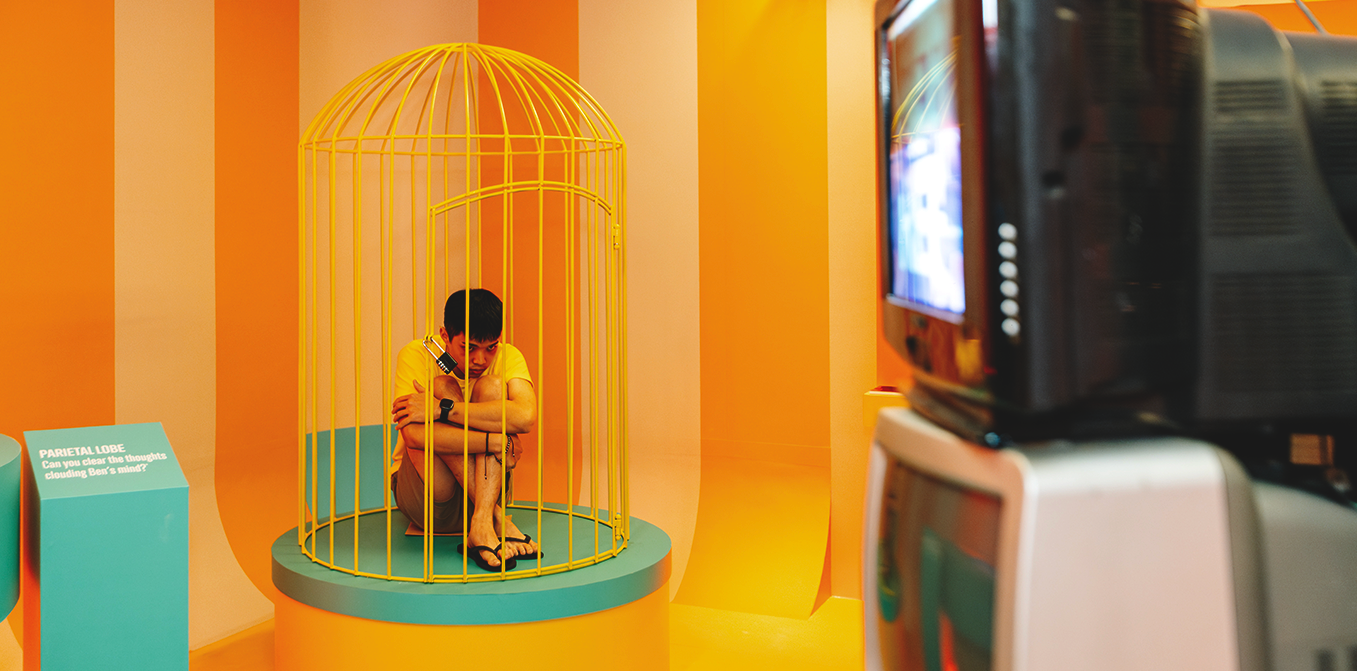
Synopsis: You heard that the Ben you once knew is gone. In his place, a hollow shell haunted by the ghosts of Larspura. A prisoner of his own mind, trapped in a labyrinth of forgotten memories and shattered dreams. Step into the depths of Ben’s brain, piece together the fragments of what happened that trip, and set him free. Key Takeaway: Our experiences shape our opinions and the choices we make. This includes our views on drugs and drug abuse. The game features experiences such as the places we visit and challenging phases in our lives which can shape our views on drugs and make us vulnerable. However, when we are aware of the influences that surround us, we can learn to stay away from influences that might lead us to form unhealthy habits. Debrief Activity: Participants will watch the video from Ben’s Brain showing the full story of what happened in Larspura. Thereafter, we invite them to reflect through a life-mapping activity which encourages them to consider personal experiences that were highs and lows in their life. This activity seeks to heighten participants’ self-awareness on significant events in their lives that have shaped their perceptions on issues in life, including their views on drug abuse.
Operation Larspura
Synopsis: Beneath the holiday picture perfect facade of the paradise island Larspura lies a dark secret. One that has ensnared countless Singaporean holiday goers including Ben. Your mission as an undercover agent: infiltrate the island, collect intelligence, and expose the truth behind it. Key Takeaway: This game was designed as a fictional reflection of how the drug trade today creates demand and supply for its drugs. It exposes the marketing playbook of Big Cannabis industry, with intent to help participants consider if they verify sources of information, or whether their thoughts and opinions may be influenced through information they consume. Highlighting macro-level influences such as marketing (e.g. otter as mascot) and pop-culture or trends (e.g. influencers) that contribute to the normalisation and spread of drug use, we hope that participants are more aware of the subtle ways they are influenced. Debrief Activity: The Operation Larspura debrief activity seeks to drive home the message of deceptive marketing, which is a big problem today, particularly in the cannabis industry. Through mock documents mirroring actual brand and marketing strategies which have normalised drug abuse, the activity seeks to nudge participants to consider the accuracy of the information they consume in real life.
Event Details & Booking Information
Date: 28 February – 6 March 2025
Location: Stamford Arts Centre
Price: Free
Opening Hours:
Weekdays: 12:15 PM – 9:00 PM
Weekends: 10:00 AM – 9:00 PM
For more information and booking of tickets, visit visitlarspura.com.
National integrated marketing campaign launching from March 2025
Following the on-ground activation the “Uninfluenced” campaign will continue with a national integrated marketing campaign that continues to draw attention to the power of negative influences in manipulating views on drugs. Through mass advertising, social and digital content, the campaign uses thought-starters to encourage discussion and reflection on the power of influences in cultivating permissive attitudes towards drugs. The ultimate goal is to encourage youths and the general public to be aware of these influences, learn how to navigate through them to protect themselves and others and empower youths and key stakeholders to engage in effective conversations that not only protects individuals from the temptations of drug abuse, but also spark conversations that offer support to those who may be vulnerable to the influence of drugs.











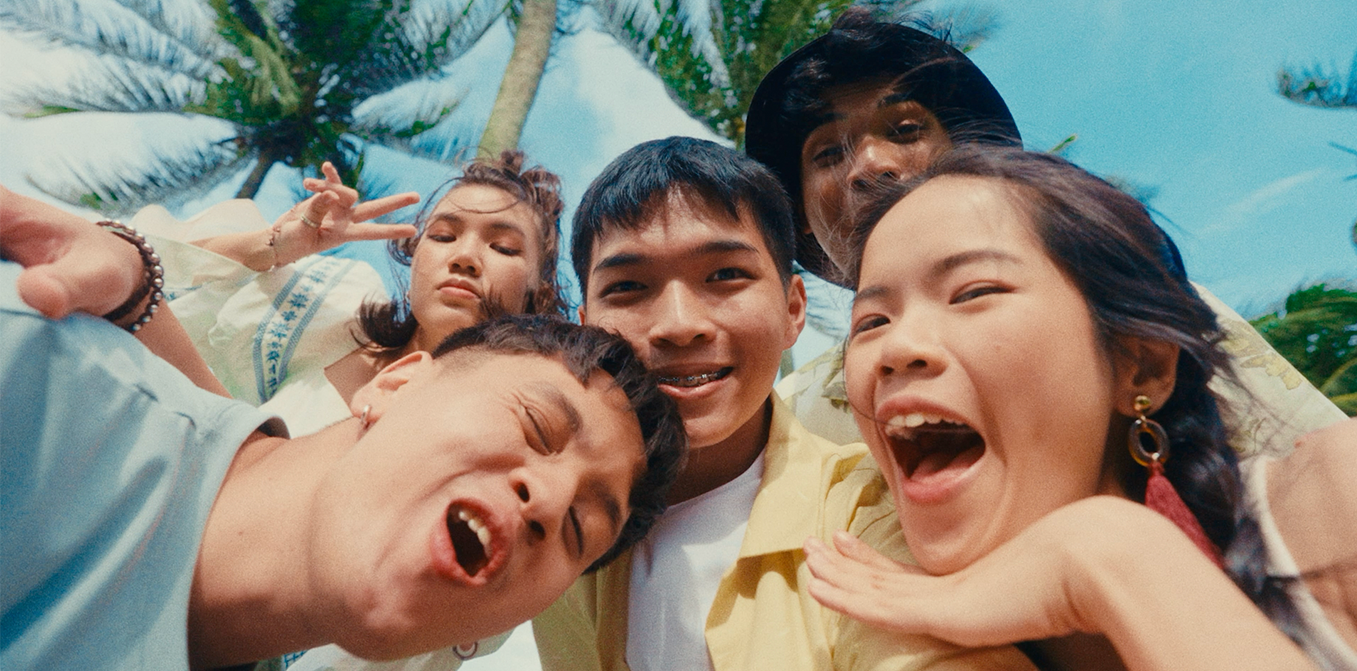








 Synopsis: A notification pings. Your Larspura group chat, silent for months, flickers back to life. It’s your friend Ben inviting you to his birthday party. Reunite with him and the rest of the crew to uncover the truth about their ‘legendary’ trip.
 Synopsis: You heard that the Ben you once knew is gone. In his place, a hollow shell haunted by the ghosts of Larspura. A prisoner of his own mind, trapped in a labyrinth of forgotten memories and shattered dreams. Step into the depths of Ben’s brain, piece together the fragments of what happened that trip, and set him free.
 Synopsis: Beneath the holiday picture perfect facade of the paradise island Larspura lies a dark secret. One that has ensnared countless Singaporean holiday goers including Ben. Your mission as an undercover agent: infiltrate the island, collect intelligence, and expose the truth behind it.